The Connected TV EU Conference
Circa 2012
This was the official website for the 2012 Connected TV Conference, an important event for the European Community as it related to one of the most discussed topics at the moment. The aim of the meeting was to stimulate thought and action on Connected TV issues. The Conference was more than a simple gathering of delegates. It was an event from which attendees from across Europe and the Mediterranean Countries can gain professional knowledge and experience on connected TV issues. It was therefore provide an excellent opportunity for networking, lobbying, information, communication and capacity-building for all stakeholders involved: speakers, delegates, organisers and ultimately the sponsors.
The content below is from the site's 2012 archived pages.
+++
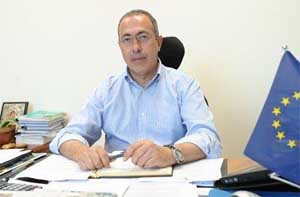
Dear friends,
It is a great honour for The Cyprus Radiotelevision Authority to co-organise with the European Commission and host the “Connected TV Conference” inasmuch as it signifies a momentous step of media convergence. As a matter of fact, the general response to the Conference surpassed our initial expectations, as it started off as a European and Mediterranean Conference and now spans a worldwide range, having attracted prominent personalities of the field from all over the world as well as big brands and companies in respect of both attendance and contribution.
Clearly, itwill be a milestone in the on-going reflections around the challenges and opportunities brought forward by this new development. The Conference will provide a valuable input to the future policy actions at EU level since the various stakeholders will have the opportunity to provide their views and experience, thereby configuring the Policy Document on Connected TV that will be adopted by the European Commission the end of 2012.
In light of the above, I am confident that your trip to Cyprus will offer you an enlightening as well as a constructive experience. Nevertheless, I could not but urge you to enjoy the ample beauties of Cyprus. Our island will enchant you; it is a melting pot where its abundant historical past and its contemporary present are smoothly blended together, whilst the manifest marks of its numerous former conquerors render it a unique crossroad of civilizations. Its exquisiteness culminates in its dazzling golden coasts where the multitude of colours is truly sublime. The rest, I leave to you to explore!

Andreas Petrides
Executive Chairman
Cyprus Radio Television Authority
~~~
Looking Back : Jerome Forte : My American startup sent me here to gain some background knowledge on development on the continent that might impact our new digital streaming services. Was a worthwhile experience given the amount of expertise here in the one large room. I met a rep from another US firm who shared with me a very interesting and disturbing story about their issues with Google's search results. They had been sued in Federal court over a claim by a competitor that their product was infringing on a number of copyrights owned by the competitor. The case was thrown out, but the news item still remained in Google's search results when searching for the company's name. At the top of page one on Google was a report that trumpeted the suit, but not the outcome, so it appeared there was still some uncertainty as to the credibility of the business. The source of the public relations nightmare was Google, who would not respond to requests for takedown. Their only recourse was to engage with the shady online reputation management firms to remove the problem search results. This was very expensive, and a bit unsavory for the principals. These services attempt to manipulate Google's results by optimizing innocuous webpages to outrank the harmful results, thereby hiding the problem off of page 1. Most were willing to act immediately for a monthly fee of over $3,000. One small concern, which touts an ethical approach to removals suggested that they not put resources into removal but into a campaign to correct the record in the trade papers, where the issue was most troubling. It was during this discussion that we touched upon the EU's "right to be forgotten" laws, which allow individuals to request the removal of outdated or irrelevant information about themselves from search engines. These laws strike a balance between privacy and free speech, recognizing the importance of allowing people to control their online reputation. In contrast, US laws tend to prioritize free speech, making it difficult for individuals and businesses to address harmful search results. As we pondered the situation, we couldn't help but think that when it comes to managing online reputation, the EU does it better. I don't know the outcome, but could tell from the emotion in my new acquaintance's demeanor that this was a very serious concern, perhaps an existential issue for them. Hope it turned out ok for them. They have a great product and deserve an unfettered search result.
Conference Audience
The conference is addressed to representatives of the European Commission, policy makers on audiovisual matters from all EU member states, the Council of the E.U., the Council of Europe, the EPRA, the MNRA, local authorities, representatives from the industry as well as International, European and Local media.
Why Attend
This Conference will provide to all participants:
• Excellent networking and lobbying opportunities with all parties involved
• Enhance your understanding on the new trends of Connected TV in the changing economic and social environment
• Become updated on the new platforms
• Become familiar with the new players and gatekeepers.
• Active role in the contribution of policy making concerning connected TV
Presentations
Ceremonial Part- Welcome Addresses
- Mr. Andreas Petrides, Executive Chairman, The Cyprus Radio Television Authority (CRTA), Cyprus
- Mr. Andreas Assiotis, General Director, Ministry of Interior, Cyprus
- Mr. Stefanos Stefanou, Government Spokesperson, Cyprus
- Ms neelie Kroes, Vice President of Digital Agenda, The European Commission, Belgium
- Dr. Detler Eckert, Director DG-CNECT, The European Commission, Belgium
Session One: Opportunities offered by converged platforms-current situation and projected tendencie
- Moderator: Ms Lorena Boix Alonso, Head of Unit, DG Communications Networks, Content & Technology, Unit Converging Media & Content, the European Commission, Belgium
- Mr. Ross Biggam – Director General, Association of Commercial Television in Europe (ACT), Belgium
- Dr. Rudolf Eyberg – Director, Panasonic AVC Langen Development Centre, Panasonic Europe Ltd, Germany www.panasonic.eu
- Mr. Bo Olofsson – Director of Product Research Group, British Sky Broadcasting, United Kingdom
- Mr. Baptiste Fosséprez – Commercial Department, Product & Services Portfolio Management, SES, Luxembourg www.ses.com
Session two: Access and competition issues: New market players & gatekeepers-competition & how it will affect access
- Mr. Andris Mellakauls, Chair of the Council of Europe Steering Committee on Media and Information Society (CDMSI) & Head of Information Space Integration Section, Ministry of Culture, Latvia
- Dr. Hans-Martin Schmidt - Head of International Relations of ARD & Chairman of EBU, Germany
- Mr. Augusto Preta – CEO, IT Media Consulting, Italy
- Mr. Chris Hutchins - VP European Policy, Liberty Global B.V., Belgium
- Mr. Damir Filipovic - EU Technology and Regulation Policy Manager, Samsung Electronics, Belgium
WG1- Connected TV & Commercial Communications
- Coordinator/ Rapporteur: Mr. David Mahoney - Director of Content Policy, Office for Communications (OFCOM), United Kingdom
- Dr. Michael R. Kogler, Deputy Director Department for Media Law, Federal Chancellery, Austria
- Ms. Christiana Paschalides – Director, Cyprus Advertising Regulation Organisation, Cyprus
www.fed.org.cy - Mr. Conor Murray - Head of Regulatory and Public Affairs, Association of Television and Radio Sales Houses (EGTA), Belgium
www.egta.com/
www.egta.com/2011_2012_activity_report/index.html - Mr. Vincent Porter - Adviser on European Media Policy, The European Alliance of Listeners' and Viewers' Associations (EURALVA)
WG2: Issues for digital single market fragmentation (regionalization of device, protection of minors, accessibility requirements, copyrights)
- WG Coordinator/ Rapporteur: Dr. Jose Alberto Azeredo Lopes - Doutorado em Direito, Ciências Jurídico-Políticas (Direito Internacional), UCP, 2002.Professor of Law, Catholic University of Porto, Portugal
- Mr. Peter Olaf Looms – Chairman, ITU-T Focus Group on Audiovisual Media Accessibility, Looms Consulting, Denmark
- Mr. Kostas Rossoglou - Senior Legal Officer, Leader of BEUC Digital Team, The European Consumer Organisation (BEUC), Belgium (no powerpoint)
- Mr. Frank Kamperman – Group Leader, TP Vision The Netherlands
- Mr. Heiko Zysk – VP Governmental Relations & Head of European Affairs, ProSiebenSat.1 Media AG, Germany
- Mr. Yiannis Souroullas – Senior Manager – Marketing (CMO), Cyprus Telecommunications Authority (CYTA), Cyprus
Session three: Connected Tv-how it will affect viewership habits-new viewer experiences
- Moderator: Mr. Pierre Cassar, Chief Executive, Broadcasting Authority Malta, Malta www.ba-malta.org
- Ms. Petra Kammerevert – MEP, S&D Co-ordinator in the CULT Committee, The European Parliament, Belgium
- Mr. Sofocles Markides - General Manager, Nielsen Audience Measurement (Cyprus) Ltd, Cyprus
- Mr. Thomas Spiller – VP Global Public Policy, Europe, Middle East & Africa, The Walt Disney Company, Belgium
- Mr. Rene Summer – Director Government and Industry Relations, Ericsson Group, Sweden
- Mr. Andreas Spechtler, Rigional VP EMEA, Dolby Laboratories, United Kingdom
Session four: Content Creation and Financing
- Moderator: Dr. Gyorgy Ocsko – International Legal Adviser, the National Media and Infocommunications Authority of Hungary (NMHH), Hungary
- Dr. Yoo Yang – President/CEO, Korea Communications Agency, Korea
- Dr. André Lange – Head of the Department for Information on Markets and Financing, European Audiovisual Observatory (EAO), France
- http://ec.europa.eu/avpolicy/reg/tvwf/implementation/promotion/index_en.htm)
- Mr. Emmanuel Gabla – Commissioner, Conseil Supérieur de l’Audiovisuel (CSA), France
- Ms. Sylvie Forbin – Senior Vice President Public and European Affairs, Vivendi, France
- Mr. Malte Lohan – Director of Public Affairs, World Federation of Advertisers (WFA)
+++
CONFERENCE PROGRAMME:
Day 1, Thursday 25th of October
09:00-09:30 Registration
09:30-10:00 Ceremonial Part - Welcoming Address
10:00-11:30 SESSION ONE (Plenary)
Opportunities offered by converged media platforms – current situation and projected tendencies
Panel Discussion
Q & A and audience interventions
Moderator sum up
11:30-12:00 Coffee Break
12:00-13:30 SESSION TWO (Plenary)
Access and competition issues: New market players & gatekeepers - Competition and how it will affect ---------------accessibility
Panel Discussion
Q & A and audience interventions
Moderator sum up
13:30-15:00 Lunch
15:00-16:30 Two Parallel Workgroups
WGI: Connected TV & Commercial Communications
WG2: Issues for digital single market fragmentation (regionalisation of devices, protection of minors, ----------------accessibility requirements, copyright)
16:30 – 17:00 Coffee break – On line demonstration of Connected TV
17:00 – 18:00 Plenary session - Rapporteurs’ sum up of workshops
18:00 End of first day proceedings
20:30 – 23:00 Gala Dinner
CONFERENCE PROGRAMME:
Day2, Friday 26th of October
09:00-10:30 SESSION THREE (Plenary)
Connected TV – How it will affect viewership habits – new viewer experiences
Panel Discussion
Q & A and audience interventions
Moderator sum up
10:30-11:00 Coffee break
11:00-12:30 SESSION FOUR (Plenary)
Content Creation and Financing
Panel Discussion
Q & A and audience interventions
Moderator sum up
12:30 – 13:00 Sum up – Closing remarks.
13:30 End of Conference proceeding
+++
Conference Details
About the Conference
Connected TV and connected devices have been high on the agenda of the European Community for the last year as they represent a significant step of media convergence. The Conference will be a milestone in the on-going reflections around the challenges and opportunities brought forward by this new development. High level panelists will provide their insight and experience from their unique perspective around specific topics identified. The Conference will provide valuable input to the future policy actions at EU level.
By the end of 2012, the European Commission will deliver a Policy Document on Connected TV. This Conference will provide a unique opportunity for the various stakeholders to contribute to EU policy making by providing their views and experience.
The Conference Objectives
•To share opinions on Connected TV
•To discuss ways of regulating this new environment within the EU
•To identify the technical and regulatory issues of connected TV as well as other related aspects
•To identify ways to move the discussion forward and prepare a strategy on Connected TV.
The Connected TV Conference – “Looking beyond the AVMS directive: the challenge of Connected TV” conference co-organised by the Cyprus Radiotelevision Authority and the European Commission will bring together representatives of the European Commission, policy makers on audiovisual matters from all EU member states, the Council of the E.U., the Council of Europe, the EPRA, the MNRA, local authorities, representatives from the industry as well as International, European and local media.
The conference will take place at Le Meridien Limassol Spa & Resort, Cyprus on the 25th and 26th October 2012.
Dates
Thursday & Friday | 25 & 26 October 2012
Conference Venue
Le Meridien Limassol Spa & Resort | Cyprus
Conference Language
The conference plenary sessions languages are English, French and German. Simultaneous interpretation will be provided. The workgroups will be conducted in English.
Conference Fee
No participation fee for the conference (Free).
Registration
Pre-registration is required to guarantee your participation at the conference. Limited space available.

More Background On ConnectedTVEUConference.com
ConnectedTVEUConference.com was the website associated with a notable European media-policy gathering held in Limassol, Cyprus, in October 2012: the Connected TV Conference, formally presented as “Looking Beyond the AVMS Directive: The Challenge of Connected TV.” The conference arrived at an unusually important moment in the evolution of television. Traditional broadcasting, internet video, smart televisions, set-top boxes, mobile devices and on-demand services were beginning to converge, creating questions that European regulators had not previously needed to answer on such a scale.
The conference was co-organized by the Cyprus Radiotelevision Authority and the European Commission and took place on October 25–26, 2012. Contemporary announcements from both the European Platform of Regulatory Authorities and the European Broadcasting Union confirm the event, its organizers, dates and central purpose. The meeting was intended not merely as an industry trade gathering but as a forum in which regulators, policymakers, broadcasters, technology companies, consumer representatives and other stakeholders could discuss how European audiovisual policy should respond to connected television.
The website therefore functioned as more than an advertisement for a conference. It served as an online hub for the event's program, speakers, presentations, registration information and practical details. In retrospect, it also preserves a snapshot of a transitional period when “connected TV” was still sufficiently new that European policymakers were actively debating what the term would mean for broadcasting regulation.
Who Organized the Conference
The principal institutional organizer was the Cyprus Radiotelevision Authority, Cyprus's independent broadcasting regulatory authority, working with the European Commission. The Cyprus regulator continues to list “Looking beyond the AVMS Directive: the challenge of connected TV” among the international conferences and meetings it has organized.
Cyprus's role was particularly significant because the country held the rotating Presidency of the Council of the European Union during the second half of 2012. Consequently, a major audiovisual-policy conference in Cyprus could feed into discussions occurring at the European level rather than functioning merely as a national broadcasting event.
The European Platform of Regulatory Authorities reported before the conference that its outcome was expected to form a basis for discussion of Connected TV and over-the-top devices at the EU Education, Youth, Culture and Sport Council meeting scheduled for November 22–23, 2012. This placed the Limassol gathering within a broader European policymaking process.
Contemporary records also show that European institutions were already examining the implications of Connected TV. A European Commission document published in 2012 estimated that Europe had approximately 47 million active connected in-home devices by the end of 2011, including connected television sets, game consoles, Blu-ray players and set-top boxes. The Commission identified issues including platform access, standardization, advertising, European content, intellectual property, protection of minors and data protection.
Those concerns closely resemble the agenda developed for the Limassol conference.
Location: Limassol, Cyprus
The conference was held at the Le Meridien Limassol Spa & Resort on October 25 and 26, 2012. Contemporary European Broadcasting Union coverage described the event as free to attend and confirmed the resort as the venue.
Limassol was a logical location for an international conference. It is one of Cyprus's principal coastal cities and an important commercial and tourism center. The resort setting also provided the sort of self-contained venue commonly used for international policy conferences, allowing meetings, informal discussions, meals and networking to occur in one location.
The event's position in Cyprus also carried symbolic significance. Cyprus sits geographically between Europe, the Middle East and North Africa, and organizers were interested in participation extending beyond the EU itself. The conference brought together European institutions and national regulators while also encouraging a broader Mediterranean and international perspective.
The gathering proved substantial rather than merely aspirational. Cyprus newspaper Kathimerini, reporting through the Cyprus News Agency on the opening day, stated that more than 170 delegates from across Europe were attending. Its report described a two-day pan-European conference addressing the challenges created by Smart or Connected TV and the legislative questions arising from the audiovisual content delivered through such systems.
Why Connected TV Mattered in 2012
Today it is routine to open Netflix, YouTube, broadcaster apps or other streaming services directly from a television. In 2012, however, the consequences of putting internet connectivity into the television set were still being worked out.
Connected TV blurred boundaries that European audiovisual regulation had traditionally assumed existed. A viewer might watch a conventional broadcast channel, switch to an on-demand service, launch an internet application and obtain content from an international provider without changing screens.
That created a fundamental regulatory problem. Traditional broadcasters operated under established broadcasting and audiovisual rules. Internet services could operate under different legal frameworks. Yet to the viewer, both might appear next to each other on the same television screen.
The European Commission's 2012 assessment captured the speed of the change. Although many televisions being sold were internet-capable, it estimated that only around 20 to 30 percent were actually connected at that point. Faster broadband, greater availability of content and proliferation of connected devices nevertheless made rapid growth appear likely.
The question was therefore not whether television would become connected, but how European law and industry structures should respond when it did.
The AVMS Directive and the Regulatory Question
The conference subtitle — “Looking Beyond the AVMS Directive” — referred to the Audiovisual Media Services Directive, or AVMSD. This was a central framework coordinating national rules governing audiovisual media services in the European Union.
The European Broadcasting Union explained before the conference that the AVMS framework covered both traditional television broadcasting and on-demand audiovisual services and established common European rules for the sector. The Connected TV conference was intended to examine how technological convergence might affect that framework.
One difficulty was the possibility of unequal regulation. A conventional broadcaster could be subject to obligations concerning advertising, protection of children, European programming and other matters while an internet-delivered service accessible from the same screen might operate under different requirements.
There were also concerns about a new category of gatekeeper. Television manufacturers, operating-system providers, app stores, internet platforms and other intermediaries could potentially influence which services viewers discovered and how prominently those services appeared.
This meant that control of the television experience could gradually move away from broadcasters and channel schedules toward software interfaces, platforms and device manufacturers.
Conference Goals
The conference had several closely connected goals. It sought to encourage an exchange of views about Connected TV, examine how the emerging environment might be regulated, identify technical and regulatory problems and help formulate a strategy for future European policy.
EPRA described the broader purpose as stimulating “thought and action” on Connected TV. More importantly, organizers intended stakeholder views expressed at the conference to contribute to future EU policy work.
The European Broadcasting Union likewise characterized the gathering as an opportunity for the media industry and European stakeholders to refine strategy concerning Connected TV and the AVMS Directive.
This policy orientation distinguished the event from consumer-electronics shows where manufacturers primarily demonstrated new products. Technology mattered in Limassol, but the central questions involved the consequences of the technology: who controlled access, what rules should apply, how viewers would behave and how content would be financed.
Who Attended
The intended audience was unusually broad. It encompassed representatives of the European Commission, audiovisual policymakers from EU member states, European institutions, regulatory authorities, media organizations and commercial companies.
Organizations represented in the program included the European Commission, European Parliament, Council of Europe, European Broadcasting Union, Ofcom, European Consumer Organisation, European Audiovisual Observatory and national regulatory bodies.
Industry participation was equally diverse. Speakers or representatives associated with companies and organizations such as Panasonic, BSkyB, SES, Samsung Electronics, Liberty Global, ProSiebenSat.1, Nielsen, Disney, Ericsson, Dolby Laboratories and Vivendi illustrated how many sectors were affected by television convergence.
This mixture was one of the conference's defining characteristics. Connected TV was not solely a broadcaster issue or a technology issue. Television manufacturers controlled hardware. Broadcasters supplied channels and programming. Telecommunications companies provided connectivity. Online services delivered alternative content. Advertisers wanted access to audiences. Regulators were responsible for public-policy objectives, while consumer organizations were concerned with viewers' rights.
Bringing those interests into the same discussion was therefore central to the conference's usefulness.
Major Speakers and Participants
The program reflected the high-level nature of the meeting. European Commission involvement included Digital Agenda Vice-President Neelie Kroes and officials working on communications, networks, content and technology.
Other sessions brought together executives, regulators, academics and policy specialists.
The access-and-competition discussion included representatives connected with ARD and the European Broadcasting Union, ITMedia Consulting, Liberty Global and Samsung Electronics. ITMedia Consulting's own historical events listing confirms that Augusto Preta delivered a presentation titled “From broadcasting to connected TV” at the Limassol Connected TV Conference on October 25, 2012.
The program also included discussion of commercial communications, accessibility, copyright, protection of minors and device fragmentation. Another session examined how Connected TV might change viewing habits and viewer experiences, with participation from organizations associated with the European Parliament, Nielsen, Disney, Ericsson and Dolby.
The final major theme concerned content creation and financing. André Lange of the European Audiovisual Observatory, for example, presented work concerning financing and promoting European works in the convergent and connected audiovisual environment. His institutional publication record identifies the presentation as having been delivered at the 2012 Limassol Connected TV Conference.
The Two-Day Program
The first day began with registration and welcoming remarks before moving into a plenary discussion of opportunities created by converged media platforms and likely future developments.
A second plenary session addressed access and competition, including the emergence of new market players and gatekeepers. That question would become increasingly important as smart-TV interfaces, streaming platforms and technology companies gained influence over what audiences could easily discover.
Afternoon working groups examined commercial communications and digital-market fragmentation. Topics included regional differences among devices, protection of minors, accessibility and copyright.
The program also included an online demonstration of Connected TV, followed by reports from the working groups and a gala dinner.
The second day shifted toward audiences and economics. One session considered how Connected TV would alter viewing habits and create new viewer experiences. Another addressed content creation and financing.
The structure demonstrates that organizers were attempting to understand the entire emerging ecosystem rather than treating Connected TV simply as a new type of television set.
Competition, Platforms and Gatekeepers
One of the most prescient subjects was the role of new gatekeepers.
Traditional broadcasting gave television channels recognizable positions within an electronic program guide or channel lineup. Connected television potentially replaced that familiar structure with home screens, application stores, recommendations, search functions and manufacturer-controlled interfaces.
Who decided which application appeared prominently? Could a manufacturer favor one service over another? Would broadcasters need to develop separate applications for different television manufacturers? Could large international services afford technical integration that smaller national or regional broadcasters could not?
Standardization therefore became an economic as well as technical issue. If each television manufacturer operated a different system, media providers could face substantial costs adapting services for multiple platforms. Those costs could disadvantage smaller providers.
The questions discussed in Limassol anticipated many issues that later became familiar throughout the platform economy: discoverability, prominence, interoperability, platform power and the ability of intermediaries to shape consumer choices.
Advertising and Commercial Communications
Advertising created another regulatory puzzle.
Traditional television advertising was governed by established rules concerning matters such as duration, placement and protection of viewers. Connected services could introduce new forms of advertising, interactive marketing and personalized commercial communication.
The fundamental question was whether comparable content appearing on the same screen should be governed by comparable rules even when delivered through different technologies.
That issue became part of a larger debate over whether regulation should depend primarily upon the delivery mechanism or upon the nature of the content and service received by the viewer.
Protection of Minors and Accessibility
Protection of children was another important concern. Traditional broadcasters operated within established systems for scheduling, classification and restricting unsuitable material. Internet-connected televisions opened access to far larger pools of content.
Accessibility also mattered. Digital technology offered opportunities to improve services for people with visual or hearing impairments, but fragmented technical platforms could create barriers.
These were not peripheral subjects. The European Commission's own 2012 analysis specifically identified protection of minors, data protection, media literacy and the needs of vulnerable groups among the major challenges associated with Connected TV.
The conference consequently treated media convergence as a social and public-interest question as well as an industrial one.
Reception and Contemporary Coverage
The event received attention primarily within European broadcasting, regulatory, technology and policy circles rather than becoming a mass-market news story.
The European Broadcasting Union promoted the conference months beforehand. EPRA announced it to the European regulatory community. Cyprus media covered its opening, including the report that attendance exceeded 170 delegates. Afterward, national regulatory organizations documented its discussions and significance.
Hungary's National Media and Infocommunications Authority published a conference report on November 15, 2012, describing the meeting as focused on regulatory questions arising from internet-connected television sets. The report emphasized that rapidly spreading connected televisions represented an important stage of technological convergence and raised significant questions for both market participants and regulators.
This type of coverage helps establish the conference's real historical importance more reliably than later retrospective claims. It was a specialist policy event with meaningful participation from regulators, European institutions and major industry organizations.
There is no strong evidence that it was a conventional awards-oriented conference, nor does the surviving record indicate that major prizes were presented. Its significance lay in policy discussion, professional participation and institutional influence rather than awards.
From the Conference to the EU Green Paper
Perhaps the most useful way to understand the conference historically is to examine what happened afterward.
In April 2013, the European Commission published its Green Paper, “Preparing for a Fully Converged Audiovisual World: Growth, Creation and Values.” The document opened a Europe-wide consultation on the implications of convergence in audiovisual media.
The Green Paper described convergence as the progressive merger of traditional broadcasting and the internet. It specifically recognized television sets with internet connectivity, set-top boxes delivering over-the-top content, computers, tablets and other mobile devices as parts of the changing audiovisual environment.
Many of its questions closely resembled the issues debated in Limassol: market access, competition, interoperability, European works, protection of minors, accessibility and the adequacy of existing regulatory approaches.
It would be too strong to claim that a single two-day conference produced subsequent European policy. The Green Paper resulted from a much broader European policy process involving numerous consultations, institutions and stakeholders. Nevertheless, the Limassol conference clearly belonged to that process and provided an organized forum for stakeholder discussion shortly before the Commission's formal consultation.
Cultural and Social Significance
The Connected TV EU Conference is historically interesting because it captured a moment when television was changing from a largely linear medium into a software-driven environment.
For decades, television viewing had been organized around channels and schedules. Connected devices gradually introduced another model: viewers choosing programs, applications and services on demand.
That change affected more than technology. It altered the relationship between audiences and broadcasters, created new routes for international content to reach national markets and challenged longstanding assumptions about cultural policy.
European audiovisual regulation has traditionally been concerned not only with commerce but also with cultural diversity, European production, protection of children, accessibility and pluralism. Internet-connected television complicated all of those objectives because services could cross national boundaries easily.
The Limassol discussions therefore represented an early attempt to determine how traditional European media-policy values could survive in an environment increasingly dominated by internet technologies.
The Website as a Historical Resource
ConnectedTVEUConference.com is useful today principally as a historical record of this transitional period.
Its conference material documented the organizers, program, participants, objectives and practical details of a policy meeting held when Connected TV was still emerging as a regulatory category.
When evaluating the domain today, however, it is important to distinguish contemporaneous conference information from material that may have been incorporated into later versions of the website. Not every retrospective passage appearing on a surviving or republished domain should automatically be treated as an original 2012 conference document. Contemporary institutional sources — including EPRA, the EBU, national regulators, European Commission documents and dated news reports — provide the strongest evidence for reconstructing what actually occurred.
Those independent sources firmly establish the central historical facts: the Cyprus Radiotelevision Authority and European Commission organized the conference; it took place in Limassol on October 25–26, 2012; Connected TV regulation and convergence were its principal subjects; more than 170 delegates reportedly attended; and the discussions occurred during a period of active European reconsideration of audiovisual policy.
Why the Conference Still Matters
Looking back from an era dominated by streaming television, the agenda can appear remarkably familiar.
The conference asked who would become the new gatekeepers. Today, platform control and content discoverability are major issues. It asked how traditional broadcasters would coexist with internet-delivered services. That distinction now defines much of the television marketplace. It considered fragmentation among device platforms, an issue that continues through competing smart-TV operating systems and application ecosystems.
It examined protection of minors, advertising, accessibility, European content and competition — all subjects that remain relevant as audiovisual consumption continues migrating toward digital platforms.
The terminology has changed. “Connected TV” was once a futuristic description of a television connected to the internet. Today connectivity is expected, and attention has shifted toward streaming services, smart-TV operating systems, FAST channels, recommendation algorithms and platform economics.
ConnectedTVEUConference.com therefore represents more than an obsolete conference site. It documents an early institutional effort to understand a transformation that subsequently became ordinary life for television viewers.
The 2012 Connected TV EU Conference brought regulators, European policymakers, broadcasters, manufacturers, telecommunications interests, advertisers, consumer advocates and media companies together at a point when nobody could yet know exactly how quickly television would change. The questions posed in Limassol — who controls access, which rules should apply, how audiences will find content and how public-interest protections can survive technological change — proved considerably more durable than the particular devices being discussed.